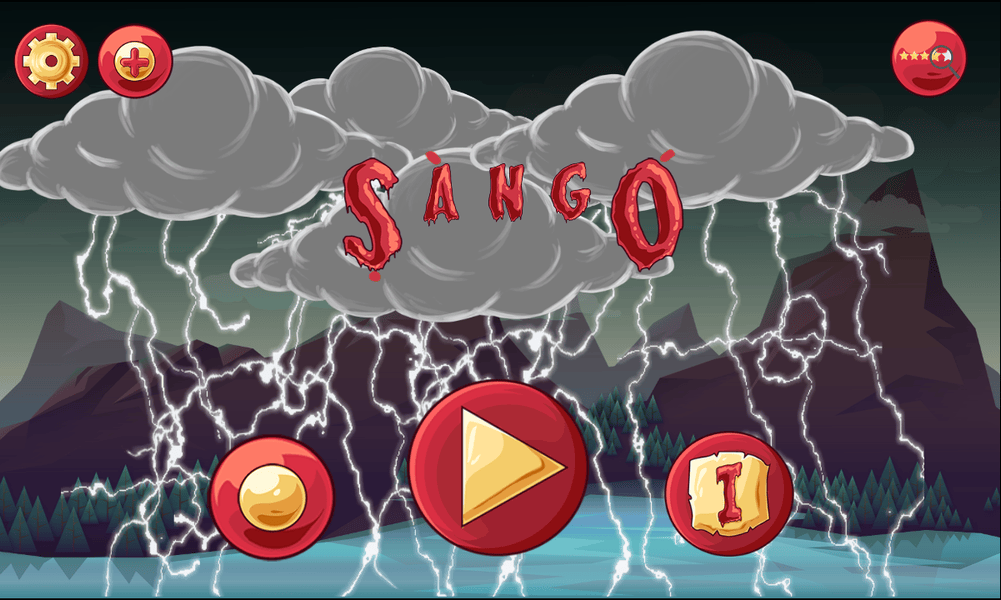
In a mobile gaming landscape dominated by endless runners and recycled fantasy tropes, Sango: The Thunder God stands apart by drawing from African mythology and transforming it into an engaging platformer experience.
As a developer, creating this game was not just about mechanics and graphics — it was about storytelling, cultural representation, and building an accessible experience that works smoothly on mobile devices.
👉 Download Sango: The Thunder God on Google Play
🌩️ The Story Behind the Game
Sango: The Thunder God follows the legendary Alaafin of the ancient Oyo Empire, reimagined as a heroic warrior battling evil forces to protect his kingdom.
Players step into Sango’s role, navigating perilous environments, battling enemies, and unleashing supernatural powers including lightning attacks and fire abilities.
The goal was simple:
Create a fast-paced action platformer rooted in cultural heritage.
🎮 Gameplay Overview
At its core, the game blends classic side-scrolling platform mechanics with combat and environmental challenges.
Core Features
- ⚔️ Story and Survival modes
- 🗺️ 4 unique maps with 40 levels
- 🐉 Boss battles and escalating difficulty
- ⚡ Lightning & fire-based abilities
- 🎮 Easy-to-use mobile controls
- 🧩 Trap navigation and puzzle-like hazards
These mechanics create an addictive gameplay loop that rewards timing, precision, and strategic combat.
🛠️ Development Stack: Buildbox + Android Studio
One of the most common questions developers ask is:
Why Buildbox instead of Unity or Unreal?
The answer lies in speed, efficiency, and mobile optimization.
🎯 Buildbox: Rapid Game Development
Buildbox enabled fast prototyping and iteration without deep engine boilerplate.
Why it worked well:
- Visual node-based logic system
- Rapid level design & physics tuning
- Built-in monetization & mobile optimization
- Lightweight performance for low-end Android devices
This allowed gameplay experimentation before committing to complex code structures.
⚙️ Android Studio: Native Control & Optimization
While Buildbox handled the core gameplay, Android Studio played a critical role in:
- APK packaging & signing
- Performance tuning & memory optimization
- Ad integration & monetization setup
- Permissions & Play Store compliance
- Crash debugging & device testing
This hybrid workflow balances speed of development with native-level control.
🎨 Designing for Mobile Performance & Accessibility
Mobile users expect smooth gameplay even on entry-level devices.
Key Optimization Strategies
✔ Sprite atlas optimization to reduce draw calls
✔ Physics tuning for consistent frame rates
✔ Lightweight UI & HUD rendering
✔ Memory usage optimization for low RAM devices
✔ Testing across varied screen densities & hardware
The goal: deliver consistent performance without sacrificing visual appeal.
🧠 Level Design Philosophy
Each level was designed around three principles:
1️⃣ Progressive Difficulty
Players learn mechanics gradually before facing complex combat sequences.
2️⃣ Environmental Storytelling
Traps, terrain, and enemy placement communicate danger without tutorial overload.
3️⃣ Reward & Mastery Loop
Boss fights and survival mode encourage replayability and skill mastery.
🌍 Cultural Representation in Gaming
Representation matters.
Drawing from Yoruba mythology and the legacy of Sango provides:
- Cultural storytelling rarely seen in mainstream games
- Educational curiosity about African history
- A fresh alternative to western fantasy tropes
This project contributes to the growing movement of African-inspired digital storytelling.
📈 Lessons Learned During Development
Building a mobile game reveals practical realities beyond tutorials.
What Worked Well
✔ Rapid iteration with Buildbox
✔ Lightweight performance footprint
✔ Cultural uniqueness as a differentiator
Challenges Faced
⚠ Device fragmentation & testing complexity
⚠ Balancing difficulty vs player retention
⚠ Performance tuning for older hardware
⚠ UX simplification for mobile controls
Each challenge refined both the game and the development workflow.
🚀 Future Roadmap: What’s Next?
🍎 iOS Release (Coming Soon)
An iOS version is in development to bring Sango’s adventure to a wider global audience.
Expect:
- Optimized touch controls for iOS devices
- Performance tuning for Apple silicon
- Game Center integration possibilities
Stay tuned.
🤖 The Role of AI in Future Iterations
Artificial intelligence opens exciting possibilities for future versions:
🎯 Smarter Enemy Behavior
AI-driven adaptive difficulty could adjust combat patterns based on player skill.
🧠 Procedural Level Generation
Machine learning could generate new level layouts to extend replayability.
🎮 Player Behavior Insights
AI analytics can help understand:
- Where players quit levels
- Difficulty spikes
- Engagement patterns
🎨 AI-Assisted Asset Creation
Future pipelines may leverage AI tools to accelerate:
- Environment art variations
- Character animations
- Sound design iterations
The goal is not replacing creativity — but amplifying it.
💡 Advice for Developers Considering Mobile Game Development
If you’re starting out:
Start small. Ship early. Iterate often.
Recommended Approach
- Prototype quickly with accessible tools.
- Test on real devices early.
- Optimize performance before adding features.
- Design for short mobile play sessions.
- Build a unique identity — gameplay or storytelling.
⚡ Final Thoughts
Sango: The Thunder God is more than a mobile platformer — it is a fusion of culture, storytelling, and accessible game development.
From leveraging Buildbox for rapid development to refining performance in Android Studio, this project demonstrates how modern tools empower independent developers to bring unique stories to life.
If you enjoy action platformers, mythology-inspired gameplay, or discovering culturally rich gaming experiences, this journey is just beginning.
👉 Play Sango: The Thunder God on Google Play
Coming soon: iOS release, gameplay enhancements, and AI-powered improvements.
Stay tuned. ⚡

